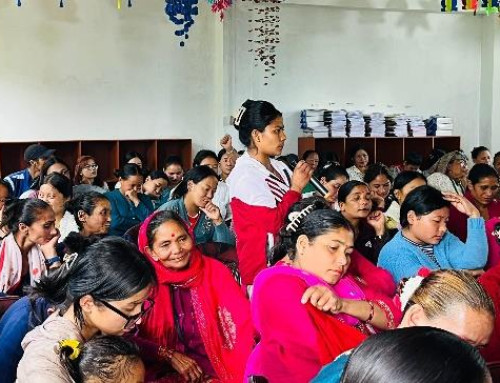
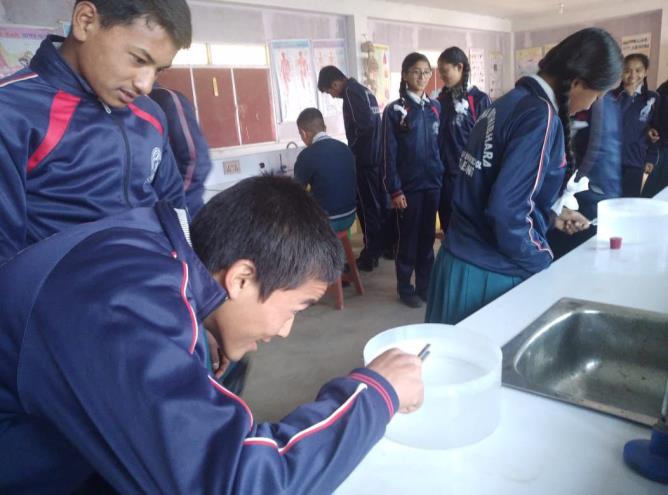
The vibrancy of our school in Hangdewa, in the NE Himalayas, hits you wherever you are in the school. Practical science lessons are loved by students who all do experiments in small groups. They use chemicals and equipment that match those in some city schools but never found in rural ones. They ask questions, test answers and then understand and remember. Sometimes they look at slides under microscopes – here they can visualize sound waves using water and a tuning fork.
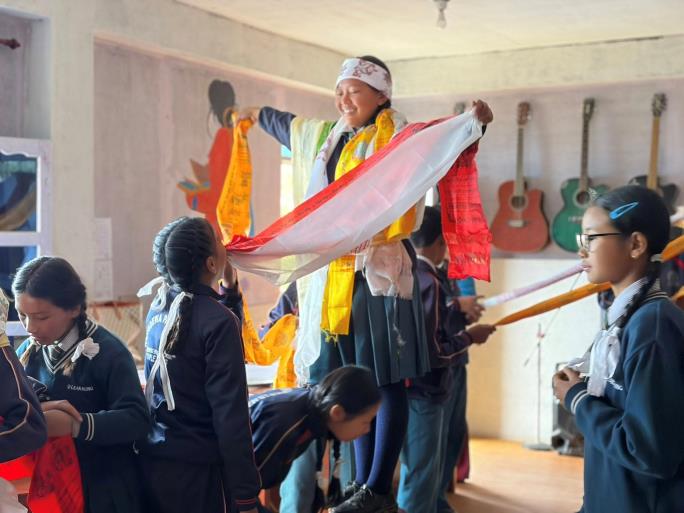
And the noisiest place in the school is the creative room. Helped by UK Acorn Theatre Group leader, Gail Rosier, Classes 3,4,5,6 and 7 all threw themselves into enacting a story about poor children who were magically found a house and a warm fire so they could fall asleep and dream about travelling to far off countries. They travelled by train, rocket and plane to the UK, USA, Korea, Japan and Russia where they became the famous landmarks and took part in national activities.
Focus on our Basic Level Exam (BLE) Class 8 Students
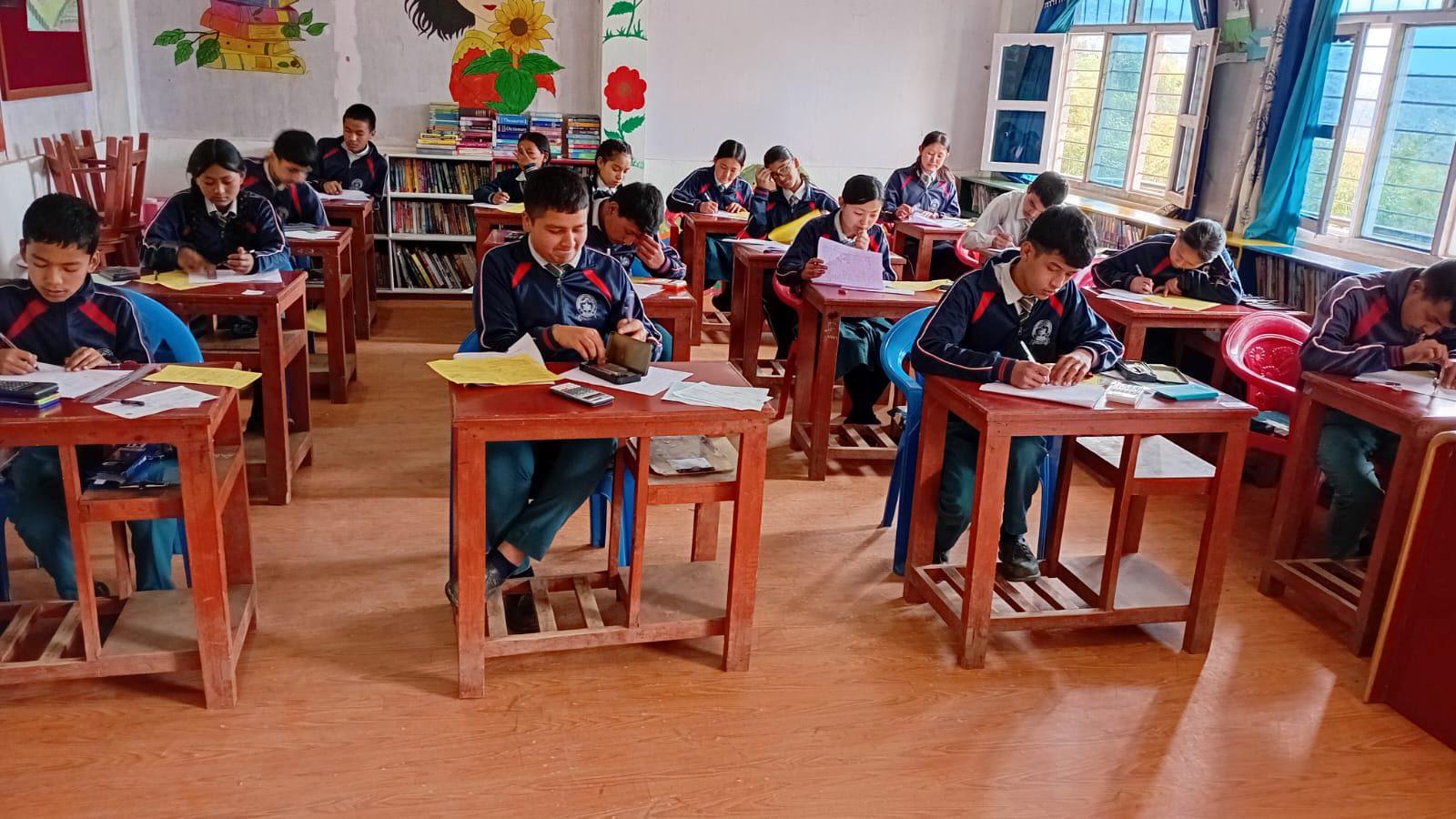
About one third of children in Nepal pass their BLE (at around age 14) – so far, 100% of ours have passed with an average of B+. A student must pass all 8 subjects (Maths; English; Nepali; Science and Technology; Social Studies and Population; Occupation, Business and Technology; Morals; Health, Physical and Creative Arts). Many hope these will be modernised in the wake of the young new government of Nepal – for us, now, it means that what we are teaching and how we are doing it is often beyond the syllabus/curriculum, such as using computer programs and apps that are in everyday use around the world. But, when it comes to public exams, traditional tools mean handwriting must be neat and written answers carefully crafted.
For 5 years, we have been very fortunate to receive donations specifically to take our Class 8 students across the border to Darjeeling in India, where they are away from the village and their family for the first time in their lives. This year, they visited a museum, zoo, tea plantation, boating lake, temple, zipline and climbing centre and had their first ever KFC and brownie.
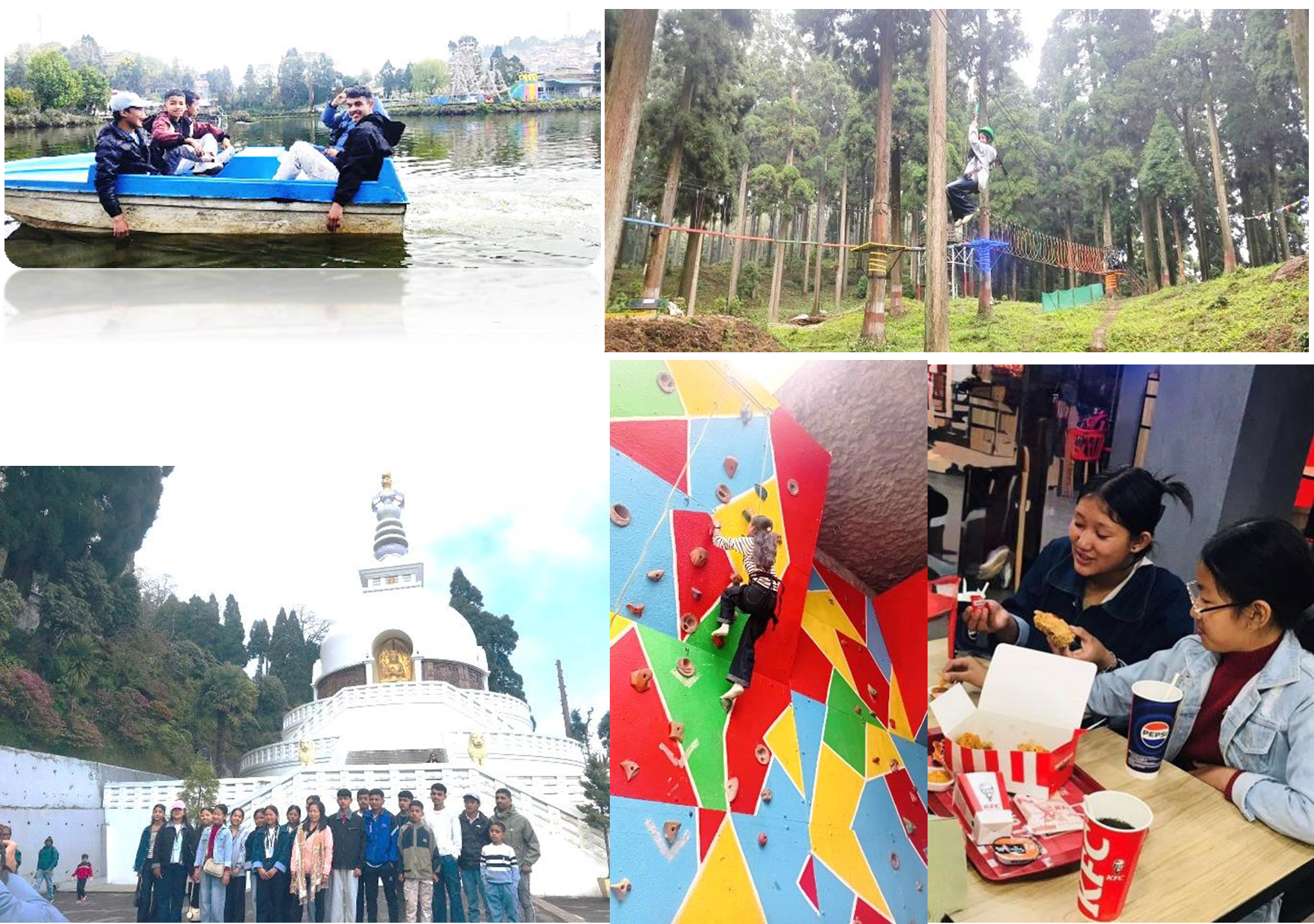
Life off the mountain was a lot of fun! Our students look forward to the trip for years!
Focus on the Early Years Montessori School Teachers
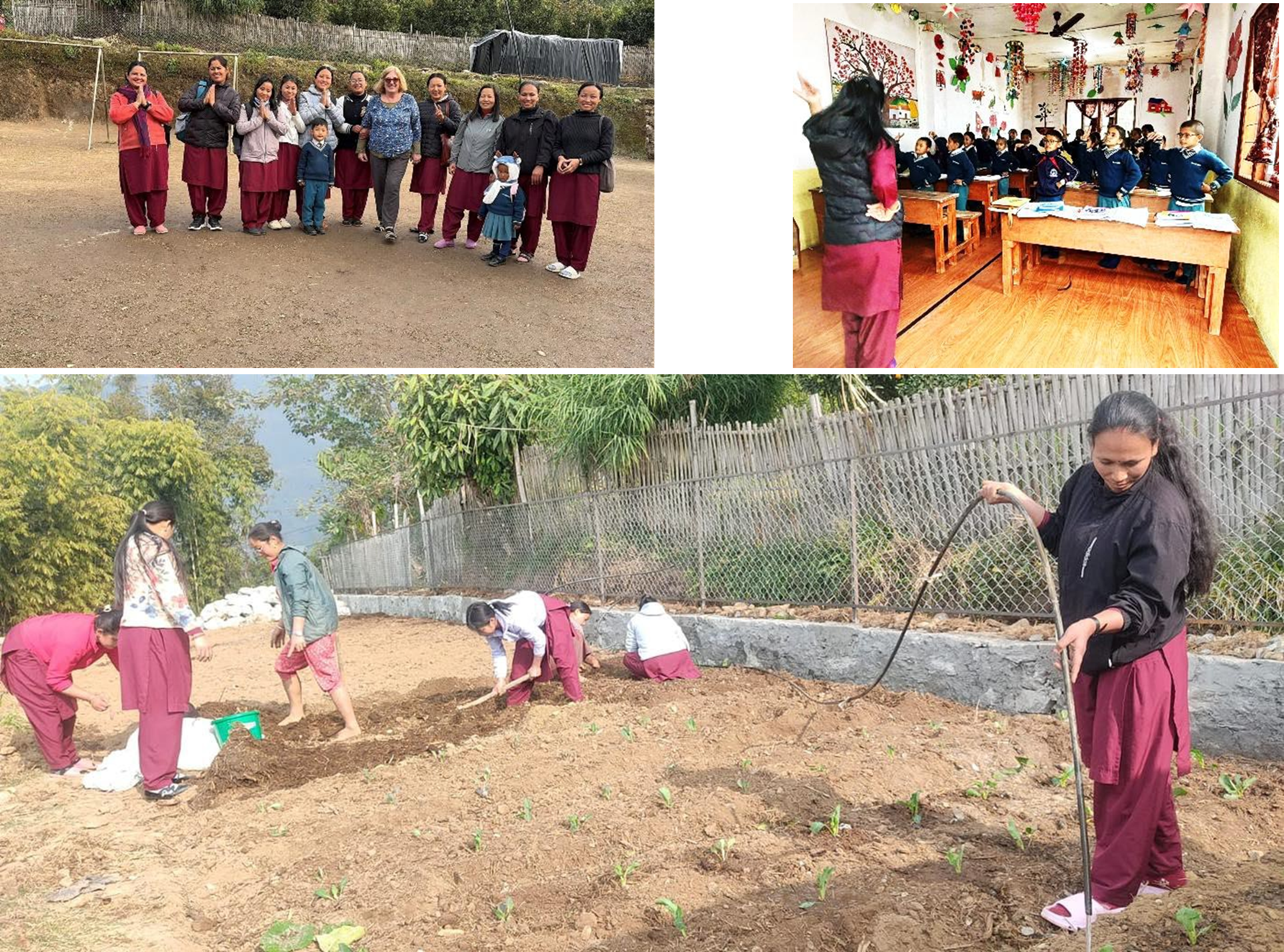
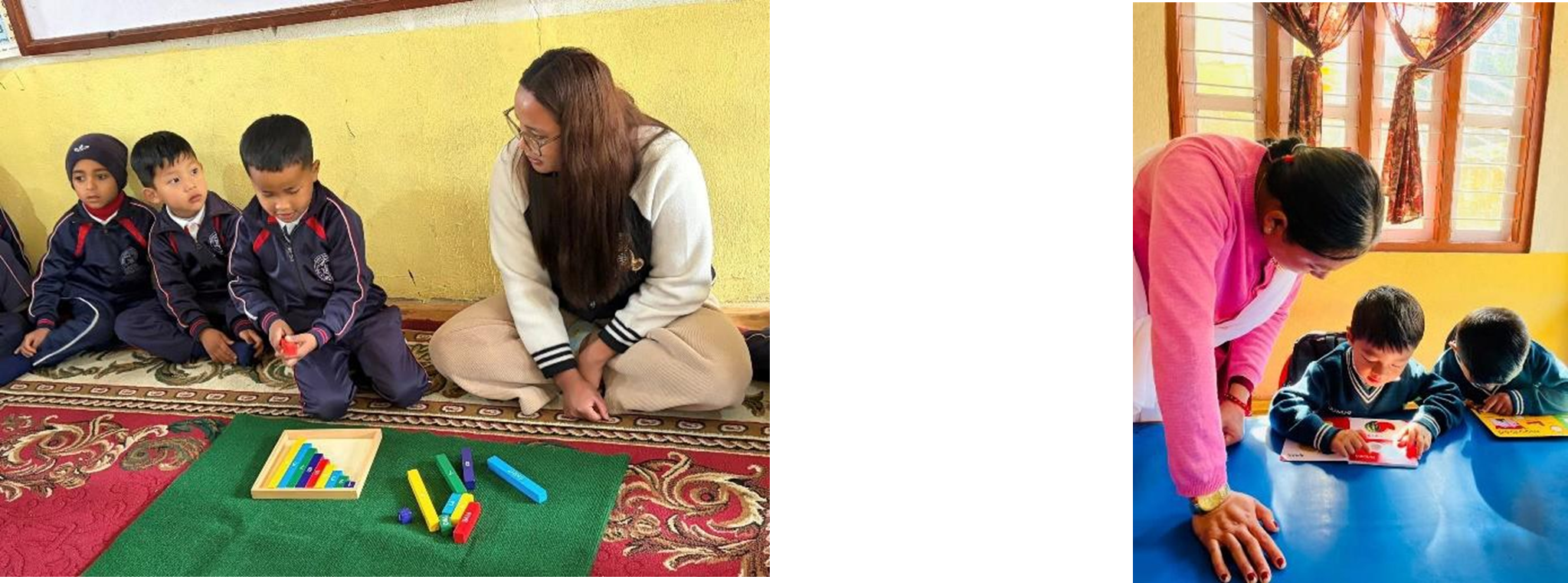
In every organisation there are unsung heroes. Ours are the teachers. Here is Lesley Warburton with those who teach our children from Nursery (age 4) through LKG, UKG, Classes 1 and 2. When the children move up to the senior Yellow School, they can speak, read and write Nepali and English, as well as having a grounding in all other subjects. These teachers make it fun to learn and give 100% of themselves 6 days a week for about 45 weeks a year. They use singing and dancing, rhymes and resources to help children learn however they can. And they do it with smiles…and then they stay on to tend the vegetable garden!
Focus on Art, Storytelling and Debating
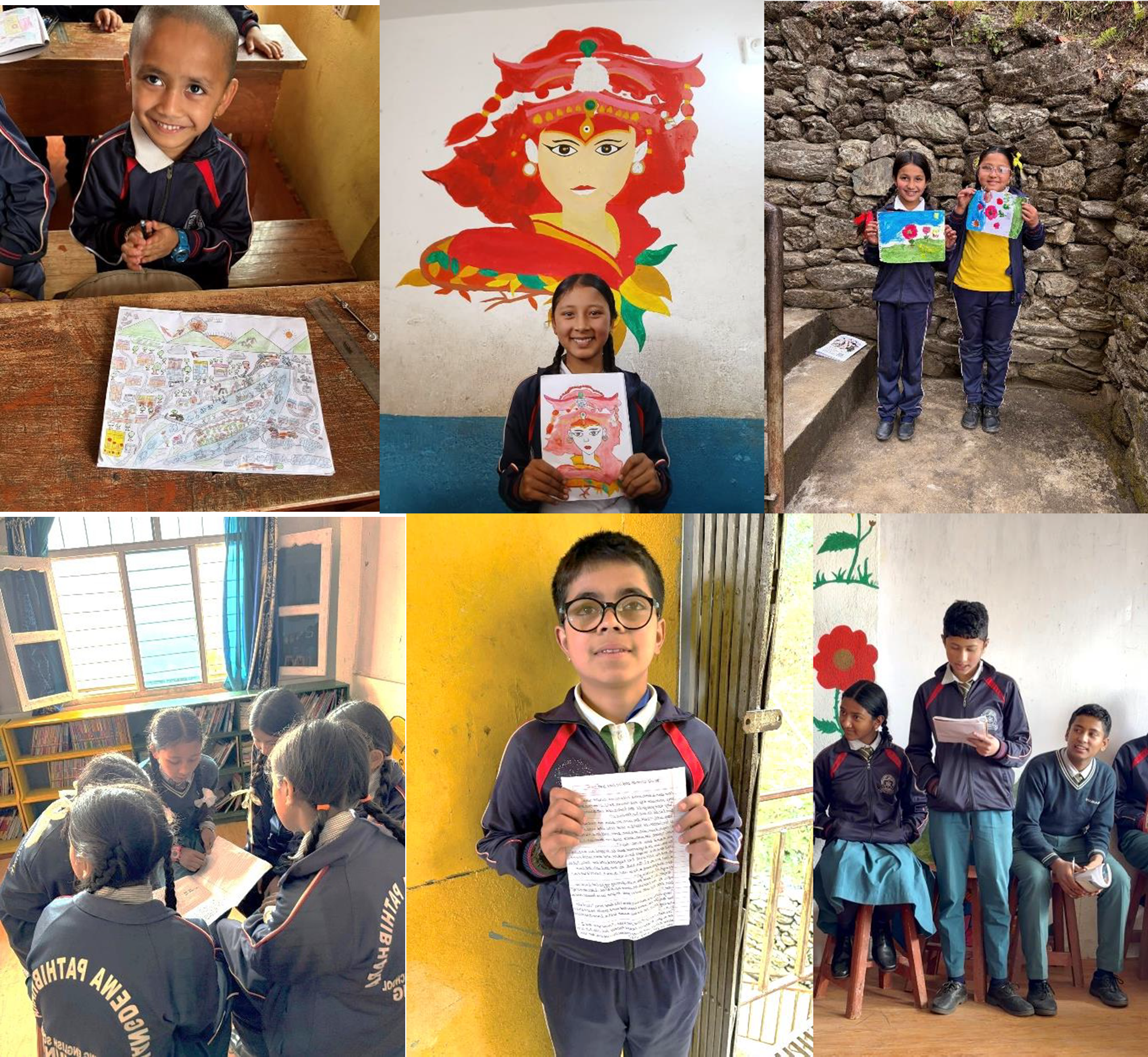
Nepal education is not set up to encourage creativity and speaking out. We are hoping to develop these further in this 2083 School Year. We have some big ideas around creating and printing a small number of books and of introducing drama and debating as after-school clubs. Anyone who feels they could help with these, please do get in touch lesley.warburton@qlearningnepal.com We very much need MORE Mentors and Sponsors of our children – please consider being a child’s special person, giving the gift of an education by buddying a child or grandchild or encouraging a friend or relative. Sponsor A Child | Q • Learning Nepal Trust CIO You can read more here Mentor-Handbook-2023-05.pdf
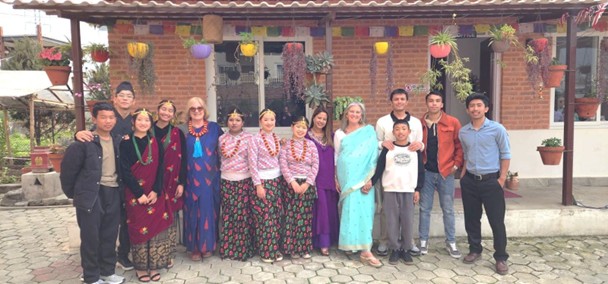
We have an ever-growing Alumni and Feshan, now sponsored by Eifion to live at ChoE and study at SWC in Kathmandu (pictured top left with others from Hangdewa currently at ChoE)), has recently set up an Alumni page on Facebook. (11) q learning nepal alumni association – Search Results | Facebook The aim is to keep our past students in touch with each other, provide support and represent the school….to the universe!
PROFESSOR SUGATA MITRA
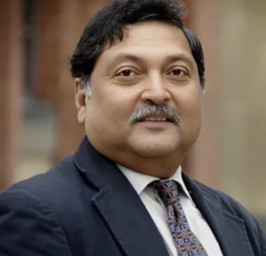
We are proud and delighted that we have a new Advisor: Professor Sugata Mitra is Indian born in Kolkata (close to Eastern Nepal), a computer scientist and educational theorist with a Ph.D. in theoretical physics. He is widely cited in works on literacy and education. Professor Sugata Mitra is a TED Prize winner who pioneered the concepts of minimally invasive education and Self-Organized Learning Environments (SOLEs) through the “Hole in the Wall” experiment and the School in the Cloud.